
What happened to Siemens’ telecoms division
Siemens and Telecoms: Understanding What Changed — and What Exists Today
For decades, Siemens was a well-known name in the telecommunications industry. Businesses across Europe and beyond relied on Siemens-branded phones, PBX systems, and enterprise communication platforms to power their internal and external communications. As a result, many organisations still associate Siemens with business telephony today.
However, the reality is very different. Siemens no longer operates in the telecoms sector, does not manufacture business phones or PBX equipment, and has not done so for many years. Understanding how and why this change occurred is essential for organisations still running legacy Siemens systems or researching replacement solutions.
This article explains what happened to Siemens’ telecoms division, how Atos and Mitel became involved, and what the Siemens brand represents today.
Siemens’ Historic Role in Business Telecommunications
Siemens was once a major force in enterprise telecommunications. Its portfolio included business desk phones, on-premise PBX platforms, and enterprise communication systems used by organisations of all sizes. These solutions were widely deployed across corporate offices, public sector environments, healthcare, and manufacturing.
For many IT teams, Siemens systems became deeply embedded into day-to-day operations. Reliability, long hardware lifecycles, and strong integration with enterprise environments helped establish Siemens as a trusted telecoms brand during this period.
But despite this strong legacy, Siemens made a strategic decision to exit the telecoms market entirely.
The Sale of Siemens’ Telecoms Division to Atos
Siemens’ withdrawal from telecommunications began when its enterprise communications business was separated and sold to Atos, a global IT services company. At this point, the telecoms operation stopped being part of Siemens as a manufacturer and technology owner.
Although some products continued to carry familiar branding during the transition, the business itself was no longer Siemens. Development, strategy, and support were now under Atos’ control, not Siemens’.
This marked the end of Siemens as an active participant in the telecoms sector — a crucial distinction that is often overlooked.
From Atos to Mitel: The Final Break from Siemens
The telecoms business did not remain with Atos indefinitely. It was later acquired by Mitel, a company specialising in business communications and unified communications platforms.
With this acquisition, Siemens’ former telecoms portfolio was fully absorbed into Mitel’s ecosystem. Any ongoing development, support, or migration paths became Mitel-led, with no operational, manufacturing, or strategic involvement from Siemens.
At this stage, Siemens’ connection to telecoms became purely historical. The business phones and PBX systems many organisations still refer to as “Siemens” are, in reality, legacy platforms that no longer belong to Siemens in any capacity.
Siemens Does Not Manufacture Telecoms Hardware Today
One of the most important points to clarify is that Siemens does not manufacture telecoms hardware.
There are:
- No Siemens business phones in production
- No Siemens PBX or IP telephony platforms
- No Siemens unified communications systems
Any equipment still in use was manufactured years ago under a business unit that no longer exists. Continued operation of these systems depends on third-party support arrangements, legacy maintenance contracts, or migration solutions provided by vendors such as Mitel.
This distinction is critical for organisations planning upgrades, compliance reviews, or long-term IT strategies.
What the Siemens Brand Represents Today
While Siemens is no longer a telecoms manufacturer, the Siemens brand itself remains very much alive — just in a very different sector.
Today, Siemens is primarily focused on:
- Industrial automation
- Manufacturing technology
- Process control systems
- Energy and infrastructure solutions
- Smart buildings and digital industries
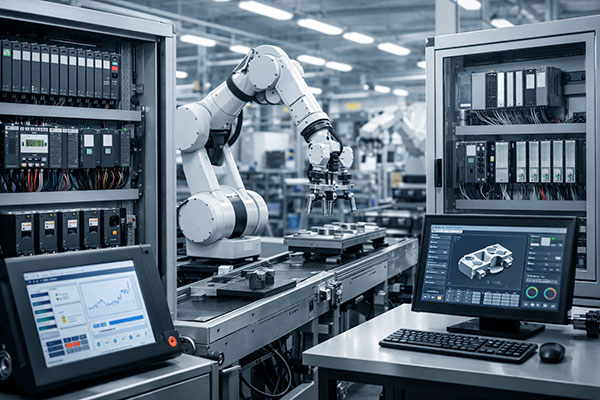
Siemens Automation equipment is widely used in factories, production environments, utilities, and large-scale infrastructure projects. These technologies sit firmly in the industrial and operational technology space, not in enterprise telephony or communications.
Confusion often arises because the Siemens name remains highly visible across multiple industries, leading some to assume telecoms products are still part of the portfolio. They are not.
Availability of Legacy Siemens Telecoms Equipment Today
Although Siemens telecoms equipment is no longer manufactured or available as brand-new stock, this does not mean organisations are unable to maintain or expand their existing systems.
MF Communications is a leading business telecoms solutions provider. We have been supplying new, remanufactured and refurbished Siemens business phones and Siemens telephone systems and parts since August 2000. We have 1,000s of new and legacy products in stock. So if you can’t find what you want, contact us and we will find it for you.